3990 €
| Dimensions | 110 × 80 cm |
|---|---|
| Colour | |
| Technique | |
| Support | canvas |
| Size | |
| Orientation | Vertical |
| Style | Expresionizmus, Surrealism |
| Theme |
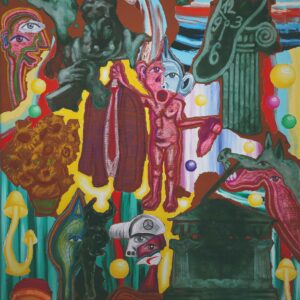
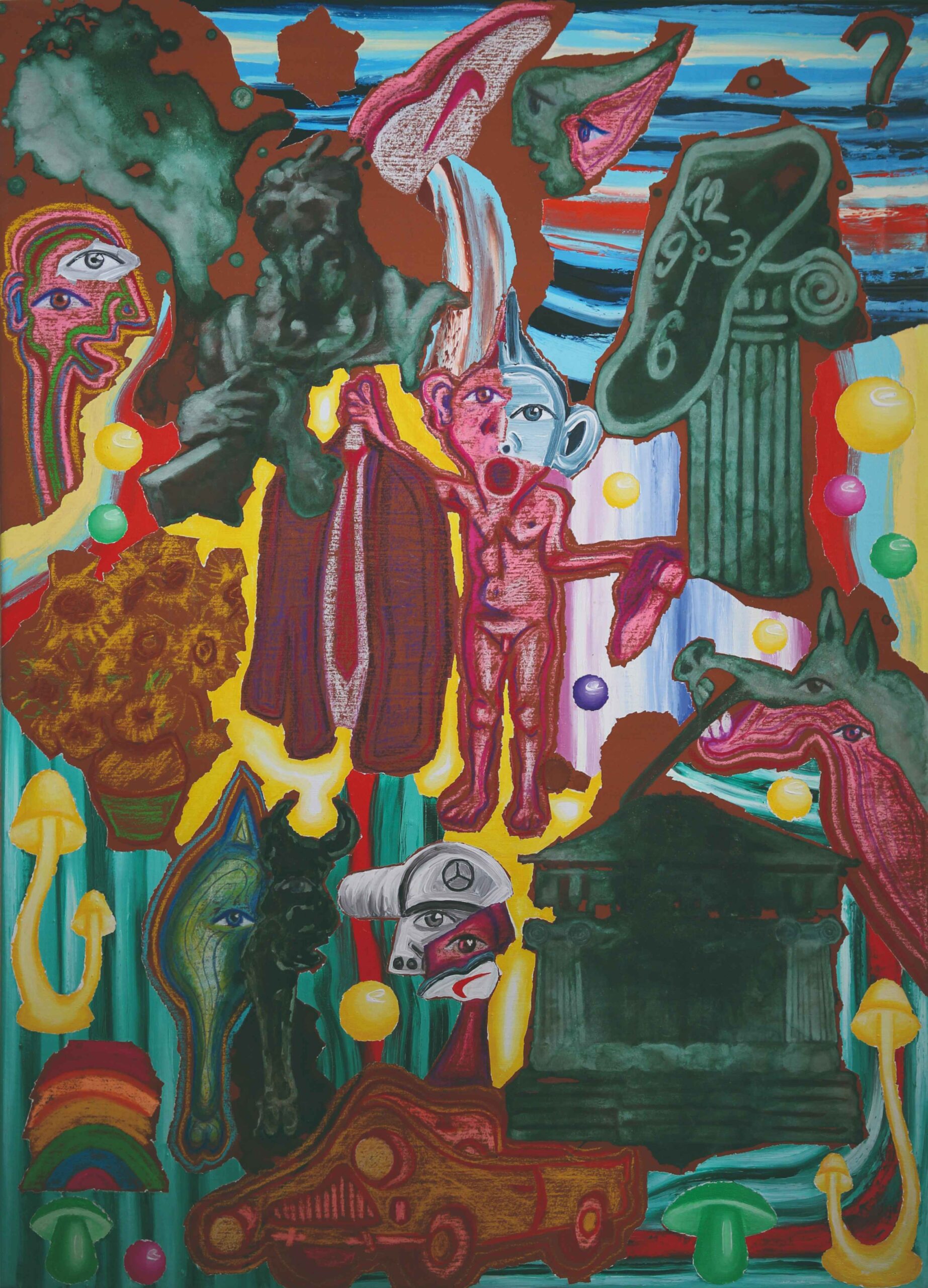
The work “Moses” reinterprets a powerful biblical archetype. However, it does not depict Moses as a messenger of God with the tablets of the law. Instead, it presents his figure as a symbol of the struggle with authority, faith, and responsibility in a time of disrupted identity.
The author works with his typical experimental technique – combining copper powder, uric acid, oxidation, dry pastel, oil, and acrylic. He uses these materials not only to create a visual effect, but as active tools of transformation. The surface of the work appears as corroding metal, emphasizing the instability and tension between tradition and the present.
The figure of Moses literally crumbles under the weight of expectations. His leadership status in the modern world is transformed into a question mark, not a certainty. The work does not provide an answer, but invites reflection.
“Moses” concludes the triptych “Altar of the Present,” along with the works David and Crucifix. All three paintings create a tense field between cultural memory and current reality—between what we remember and what we live today.