3990 €
| Dimensions | 110 × 80 cm |
|---|---|
| Colour | |
| Technique | |
| Support | canvas |
| Size | |
| Orientation | Vertical |
| Style | Expresionizmus, Surrealism |
| Theme |
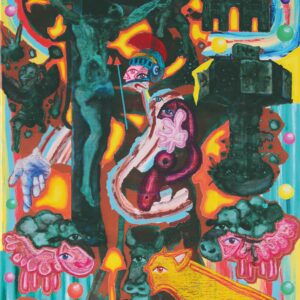
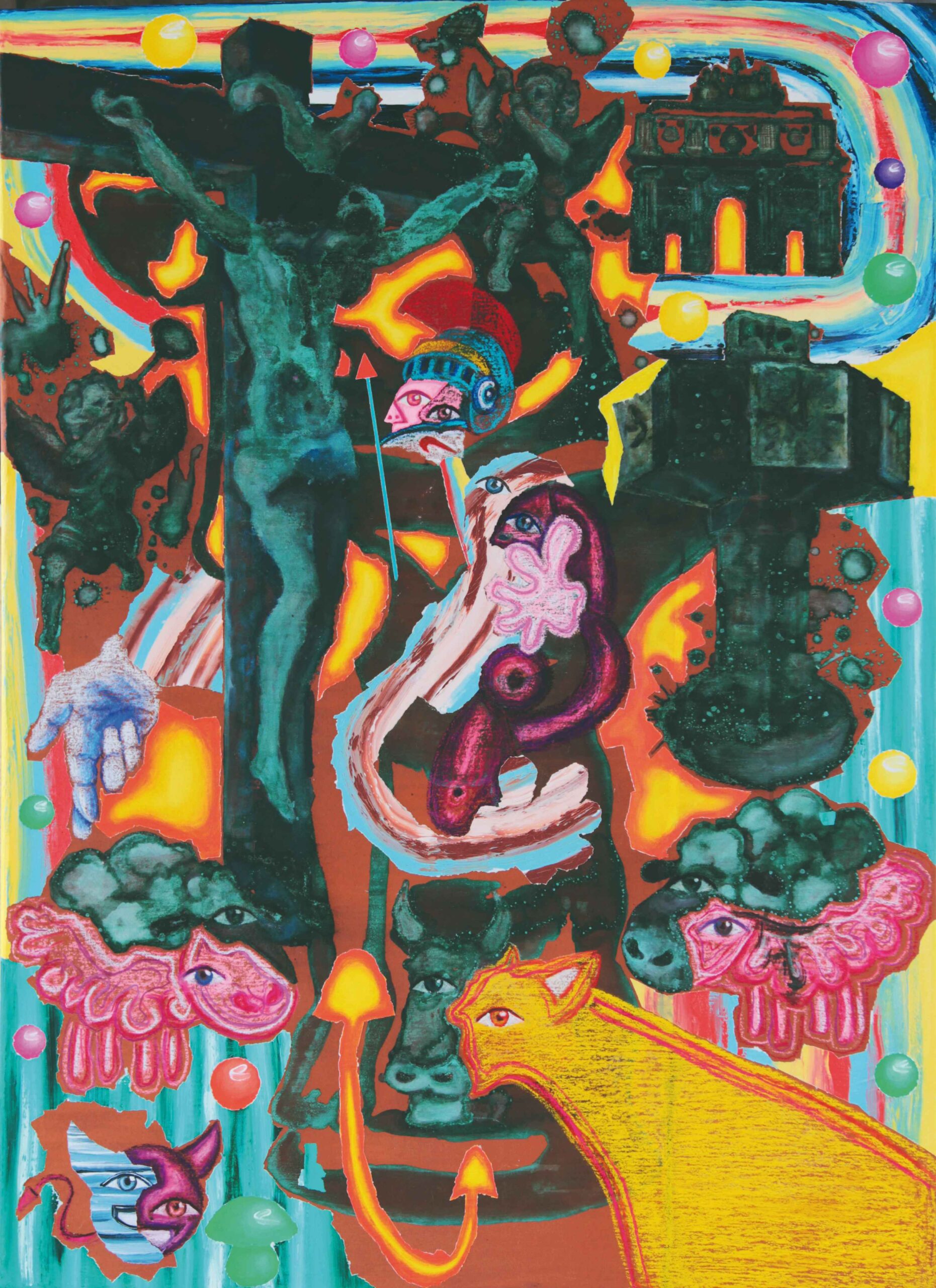
The next part of the Triptych: Altar of the Present, “Crucifix,” focuses on one of the most powerful symbols of Christianity—the crucifixion. However, it does not depict it as a traditional religious scene. Instead, it explores how this symbol is losing its form and meaning.
The author observes the decomposition of the figure through chemical processes and the layering of pigments. Uric acid, copper powder, dry pastel, oil, and acrylic together create a structure that reacts to the substrate. This is not just an artistic expression. With this gesture, Ďurček expresses a philosophical question of faith in the present.
“Crucifix” does not depict piety, but a crisis of values and identity. Oxidation disrupts iconography, and layered materials emphasize the fragility of beliefs. Those that society once perceived as solid now appear disturbed and uncertain.
The work belongs to the triptych “Altar of the Present,” along with the paintings David and Moses. In it, the author transforms classical archetypes into mirrors of today’s man. He captures doubts, contradictions, and the need to seek new meaning in a time of value uncertainty.