
770 €
| Dimensions | 50 × 50 cm |
|---|---|
| Colour | |
| Technique | |
| Support | canvas |
| Size | |
| Orientation | Square |
| Style | Abstract |
| Theme | |
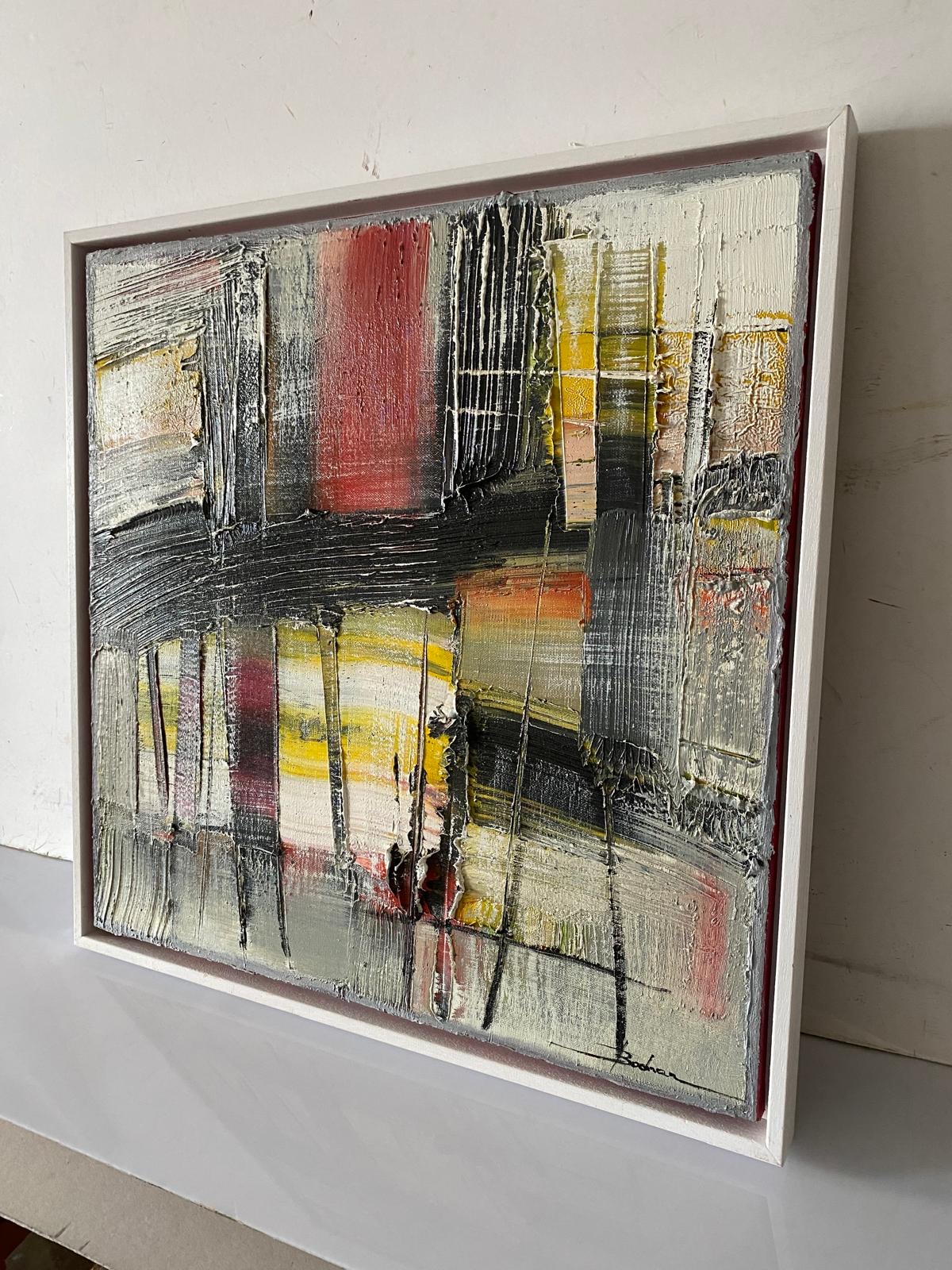
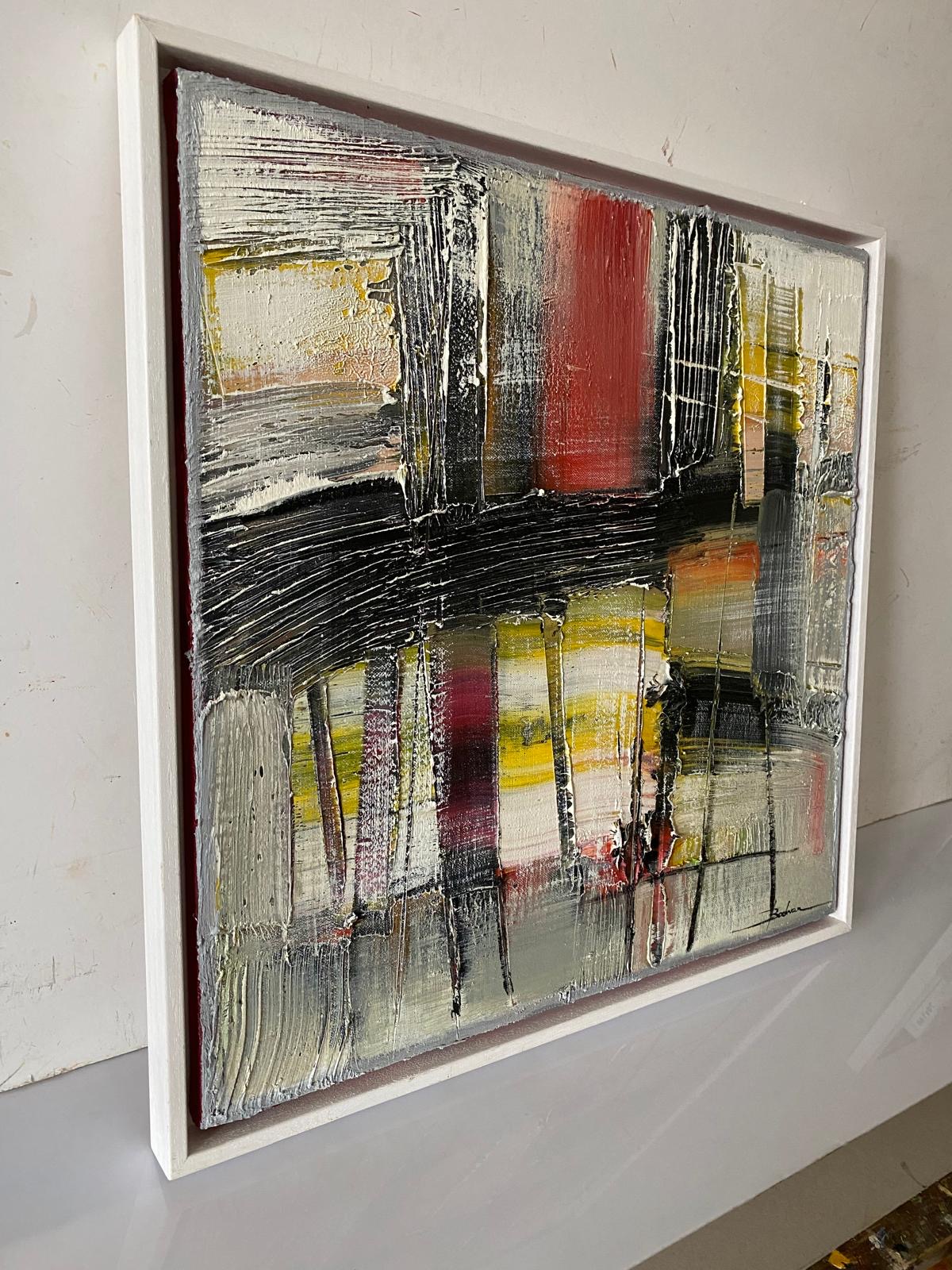
| Frame type | Floating frame |
| Frame colour | White |
| Frame material | Wood |
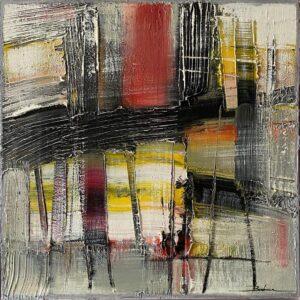
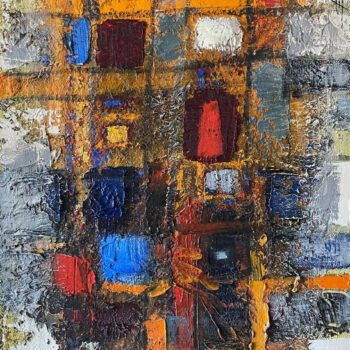
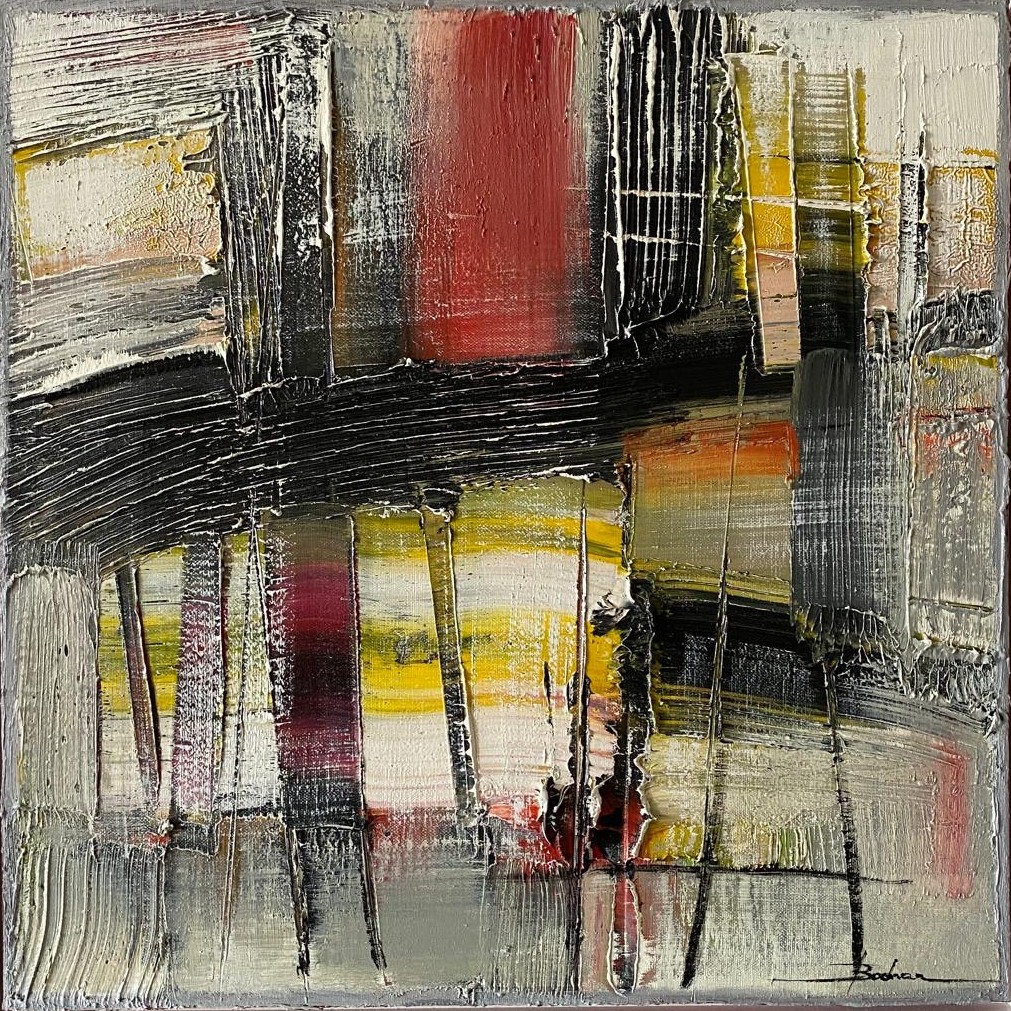
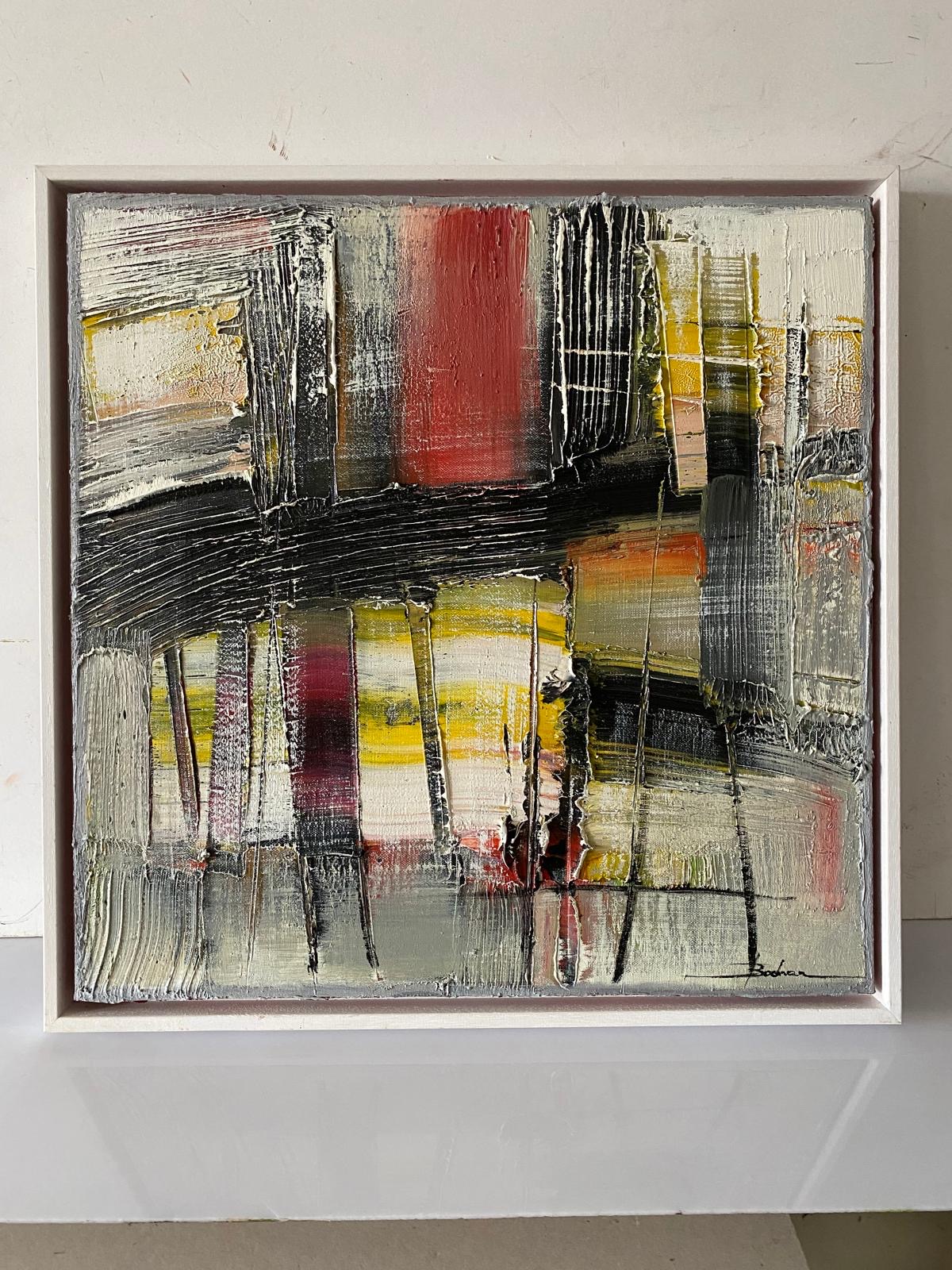
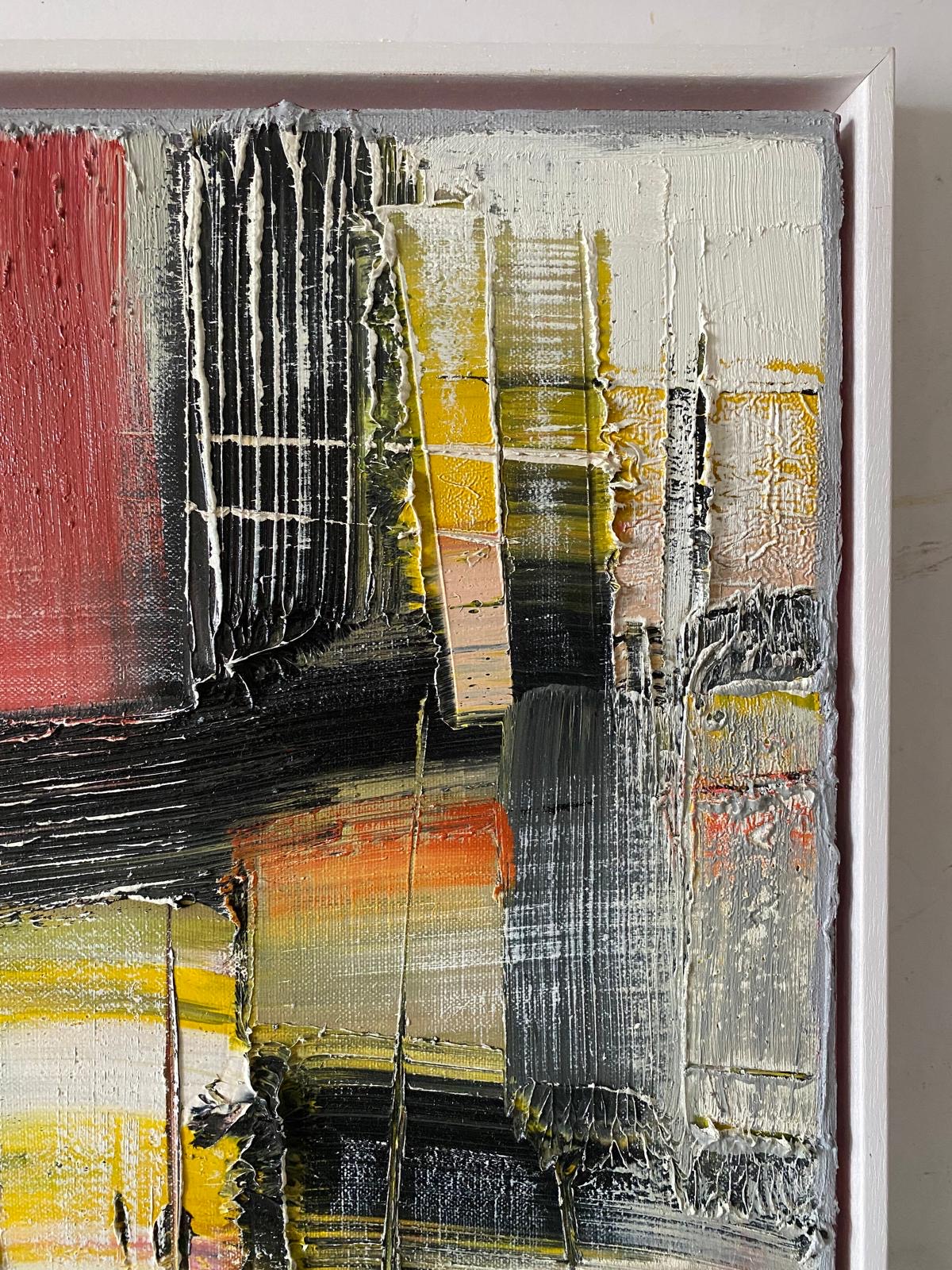
This abstract painting harmoniously combines bold colors with a geometric arrangement that references the modernist experiments of the 20th century. The artist precisely divides red, yellow, white, and black using a black grid, creating an aesthetic closely associated with geometric abstraction. Each color segment forms a contrasting yet balanced whole, allowing the viewer to perceive the dynamic interplay of colors and develop personal interpretations. The clean grid lines provide structure and rhythm, while the vivid hues evoke energy, optimism, and dynamism—key principles of the modernist movement.
From an art historical perspective, the painting is compelling in its fusion of traditional geometric abstraction with expressive color intensity. The use of a black grid to structure the space recalls the visual language of De Stijl and artists such as Piet Mondrian, while the vibrant color contrasts introduce a more emotive dimension. The composition creates a dialogue between order and freedom, rationality and emotional experience. Although the color blocks appear static, their careful arrangement allows the viewer to sense movement and tension within the composition.
The painting thus functions not merely as a decorative element, but as a reflection on the historical development of abstract painting and modern aesthetics. In the context of contemporary art, it offers an open space for individual interpretation. The viewer can observe the interaction of colors and structures, discovering personal meanings within its balanced yet dynamic framework.